















E-commerce businesses and those with both brick-and-mortar and e-commerce presences have seen online sales rise exponentially over the past decade, following rapid technological advancements. Global e-commerce sales surpassed $6 trillion in 2024 and are expected to exceed $7.4 trillion by 2026 [I]. We are now well past the aftershocks of the COVID-19 pandemic, but online sales continue to grow at a rapid pace. Online shopping has become the norm for both individuals and many B2B organizations.
Subsequently, many brands have adapted to the change in consumer needs and expectations. More attention is now placed on marketing to an online audience, with a strong focus on improving the customer experience. Brands are realizing that to remain competitive, they must deliver outstanding CX that sets them apart from their competitors and enhances brand recognition and loyalty. One way many brands have achieved this is by using a product configurator.
Get ready to learn more about:
Trends shaping online and offline retail in 2025
5 buzzwords shaping retail in 2025
- AI-Assisted commerce
- Composable stacks
- Zero-Party Data
- Immersive retail
- Personalization
Retail has undergone significant changes in the last few years. Here are the forces we see shaping the way brands sell, both in-store and online, this year:
-
AI-Assisted commerce
Shoppers expect help navigating complexity. Generative AI is now integrated into discovery, guided selling, and even configurators, enabling buyers to type or speak their preferences and instantly see viable options.
-
Composable stacks
Retailers are moving from monolithic platforms to API-driven stacks. That means configurators, PIM, CPQ, and storefronts plug together more flexibly, and scale without painful re-platforms.
-
Zero-Party Data
With third-party cookies fading, brands need direct signals from customers. Configurators are ideal for capturing explicit preferences (such as color, size, and finish) that inform marketing, product development, and personalization.
-
Immersive retail
3D and AR are no longer extras; they’re conversion drivers. With WebGPU rolling out, interactive visuals will load faster and appear sharper on everyday devices, blurring the line between online and in-store experiences.
-
Personalization
Shoppers expect brands to know their preferences and reward those that do. In fact, 57% of consumers say they’ll spend more with brands that offer personalized experiences. That makes personalization not just a nice touch, but a direct driver of revenue. [II].
What is a product configurator?
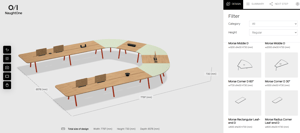
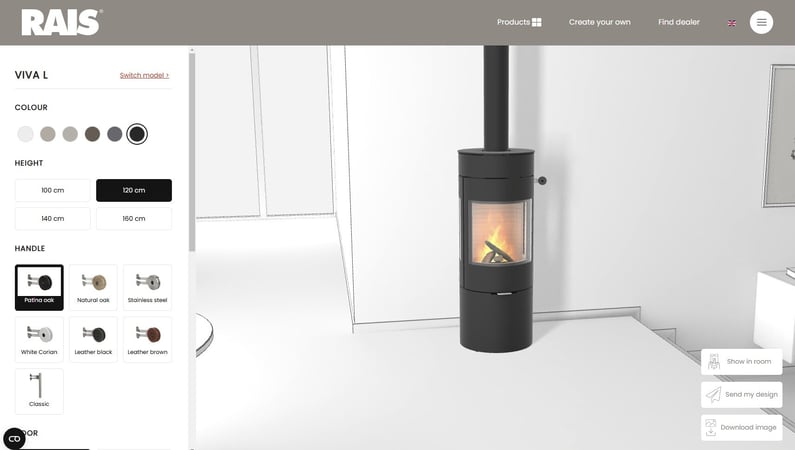
A product configurator, also known as product configuration software, is a valuable tool that enables a business to create a customized 3D model of a product tailored to a client or customer’s specific requirements. For example, if someone wants to see what their new kitchen could look like, a designer would use a kitchen configuration tool to automate the process and display a 3D version of the kitchen.
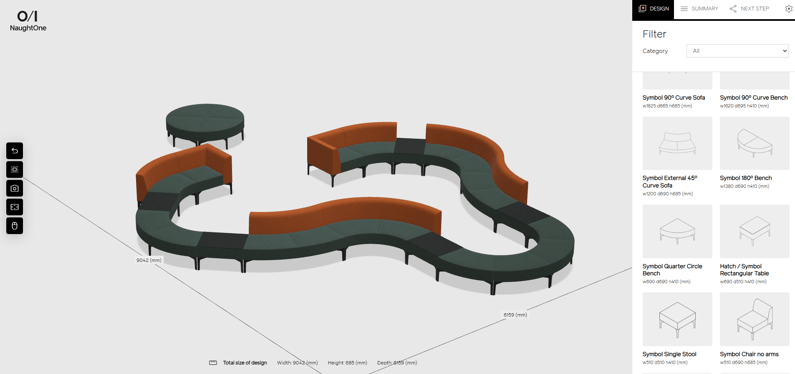
The customer could then view the model from all angles, zoom in or out, and request changes as necessary, which could be easily and quickly performed using the product configuration software. Other product configuration examples include clothing shops that enable customers to customize their own t-shirts or a furniture company that lets customers design their own sofa or shelf. In either example, customers might choose specific attributes, such as size, color, sleeve length for the shirts, or cushion style for the sofa.
Initially, product configuration was used primarily in the manufacturing industry. However, as more brands across various sectors recognized the benefits of utilizing product configuration for e-commerce, it has come to play a significantly larger role in the realm of online shopping.
Today, the majority of product configurators are so intuitive and user-friendly that customers can easily create their own customized products without needing professional assistance. Therefore, product configurators are popular tools on websites.
The benefits of a product configurator
One of the best ways an e-business can assist a customer is by enabling them to help themselves, all while improving the customer experience and simplifying the purchase process. Product configuration is an ideal tool for this, guiding customers smoothly without being too intrusive.
The top product configurators provide a range of benefits for both consumers and e-commerce businesses:
1. Product configuration can be used to present and sell complex products
Many complex products, which are more suited for B2B transactions, often contain a host of features and options or require numerous calculations to be performed before a model can be properly created and displayed. Product configuration software enables clients or customers to easily assemble models simply by selecting the features and options they desire. Such an intuitive and advanced process is highly preferred, and, of course, much more convenient than checking off a bunch of options in a catalog without being able to actually visualize the completed product.
Additionally, presets for each product ensure improved accuracy, preventing customers from selecting features or options that are incompatible with one another. The product configuration software will alert the customer if an option cannot be selected.
2. Improved quote and pricing accuracy
Preparing quotes used to be a time-consuming task. The client or customer would need to relay their requirements to your sales team, which would then require time to prepare a quote and return it to the client. With a product configurator integrated into your e-commerce site, customers can receive an immediate quote when they submit an order. This saves your sales team a great deal of time and ensures that pricing is accurate. This also frees up time for your sales team to assist other customers who may require additional support.
Real-time price calculations, among other features, make Vedum's kitchen configurator a valuable tool for both the company and its potential customers.
Read more about product configurators created in an inspiring environment like Vedum's.
3. Manufacturing receives the correct information
Human error can never be eradicated. When working with manual submissions of specifications and materials, mistakes can occur. And sometimes, the product then gets made incorrectly before anyone realizes the error. This costs your business time and money, and also results in an unhappy customer. But with a product configurator putting together the order for you, this problem is solved. In fact, you could even call it a solutions configurator.
The product configurator can even alert the client that some materials might not be available before completing the order, or it won’t offer the option at all if the materials aren’t currently in stock. Manufacturing receives the correct order directly from the product configuration software. The product gets made correctly, and everyone is happy.
4. Product configuration meets customer expectations
Today’s consumers expect a lot. They want to be able to find the information they seek quickly, and they certainly don’t want to spend time talking with customer service or a sales representative if it’s avoidable. Product configuration addresses these pain points by offering customers speed, independence, and the flexibility to easily create custom products. The intuitive product configuration software enables customers to quickly design and order their desired product, improving both brand recognition and brand loyalty.
A pain point of online shopping is the loss of the ability to touch and review the product in person. This can be partially aided by the 360-degree viewer, which replicates the in-store experience. Additionally, customers can save their configuration and resume where they left off.
You might also like: The best online configurators that increase your sales.
Why do you need a product configurator?
In short, a product configurator is essential to streamlining efficiency and improving customer loyalty. It impacts the speed at which orders can be processed and proposals and contracts can be written. Your product designers can create rules and constraints for the product configuration software, enabling it to evolve and become more potent over time, thereby consistently offering the ideal solution for your customers.
And, chances are, your competitors may already be using a product configurator. Many brands across a multitude of industries have recognized that CX is a critical component of brand success. Subsequently, they have sought ways to meet and exceed higher customer expectations, converting leads into customers.
Product configuration software may sound complex, but it is actually a user-friendly marketing tool that enables you to showcase your entire product range, along with the value of each product. Especially, if you partner up with an agency that knows exactly how to transform wishes, needs, and customer insights into a user-friendly tool that inspires and attracts.

Product configuration and the customer journey
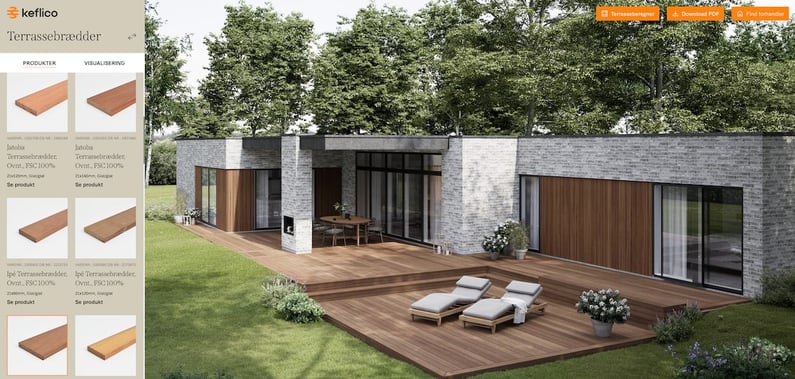
With a product configurator on your website, customers can easily bring their ideas to life. Creating a visual representation of the client’s selections provides a great customer experience, especially when complex products are involved. There is no interruption to the customer journey due to delays in design or errors in inventory management.
This makes it easier than ever for your customers to purchase products from your brand. Customers will also appreciate the photorealistic 3D quality of the presented products, reassuring them that what they see is what they will get. It’s a win-win – your customers have fun with your product and your brand, they are reassured and proud of their customized solution, and your sales representatives will spend less time per customer as they all come well-prepared.
You might also like: "What is the eCommerce customer journey your customers will love?"
Sources
https://www.emarketer.com/content/worldwide-retail-ecommerce-forecast-2024
[II] https://blog.blackcurve.com/content/dam/Deloitte/ch/Documents/consumer-business/ch-en-consumer-business-made-to-order-consumer-review.pdf